A. Yartseva
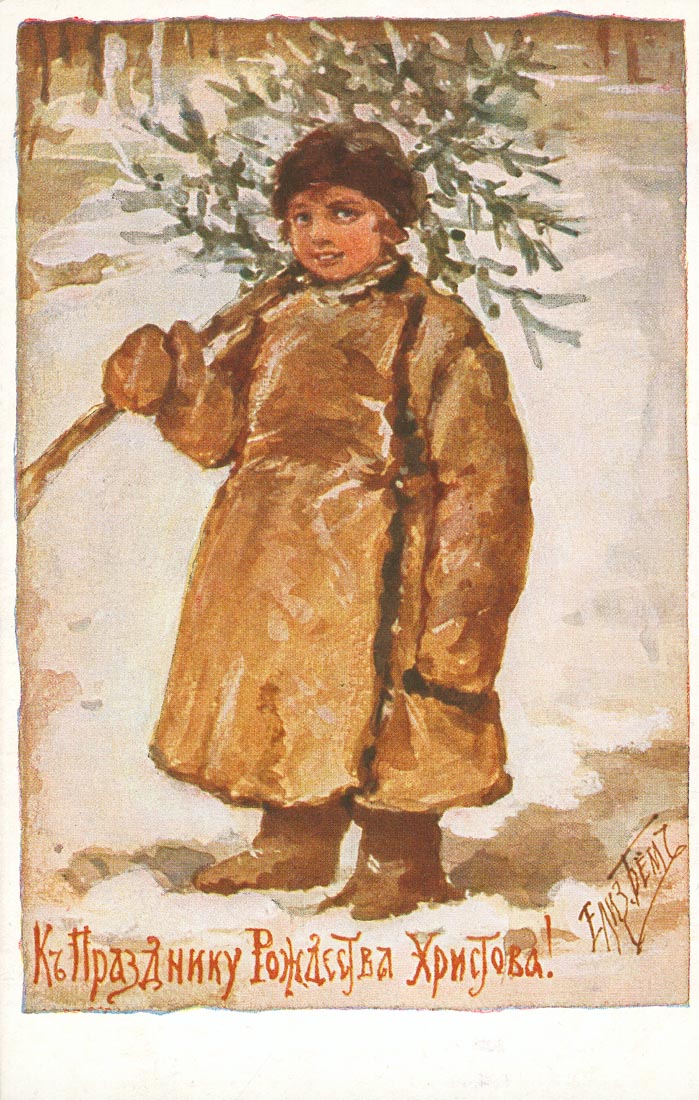
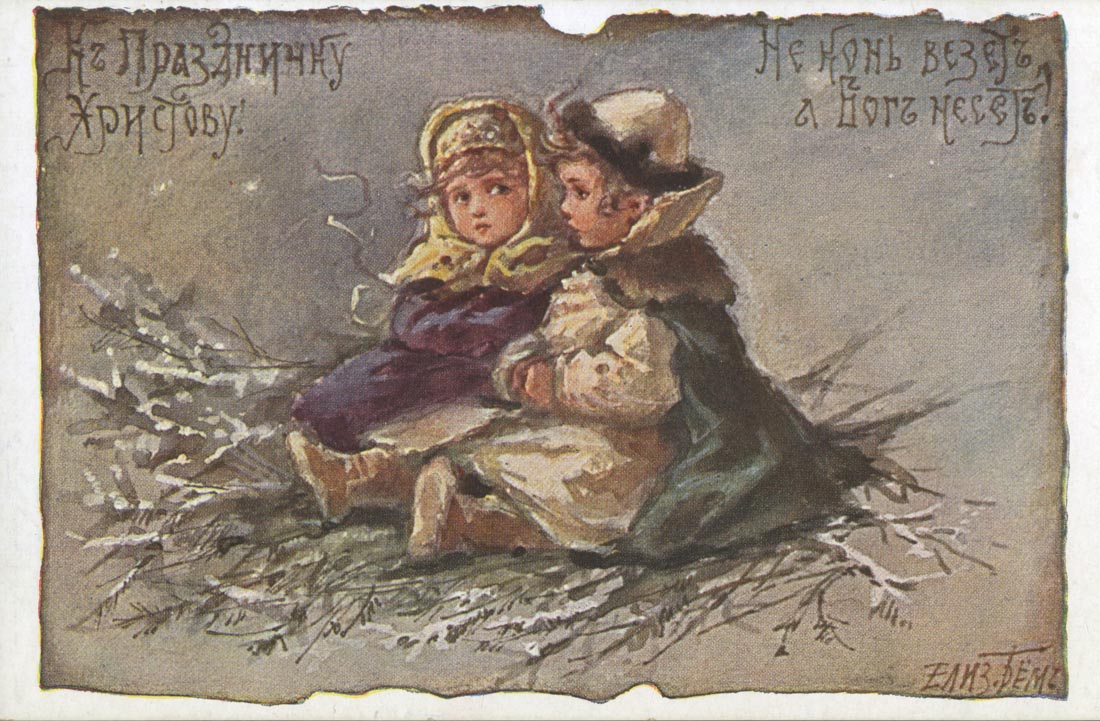
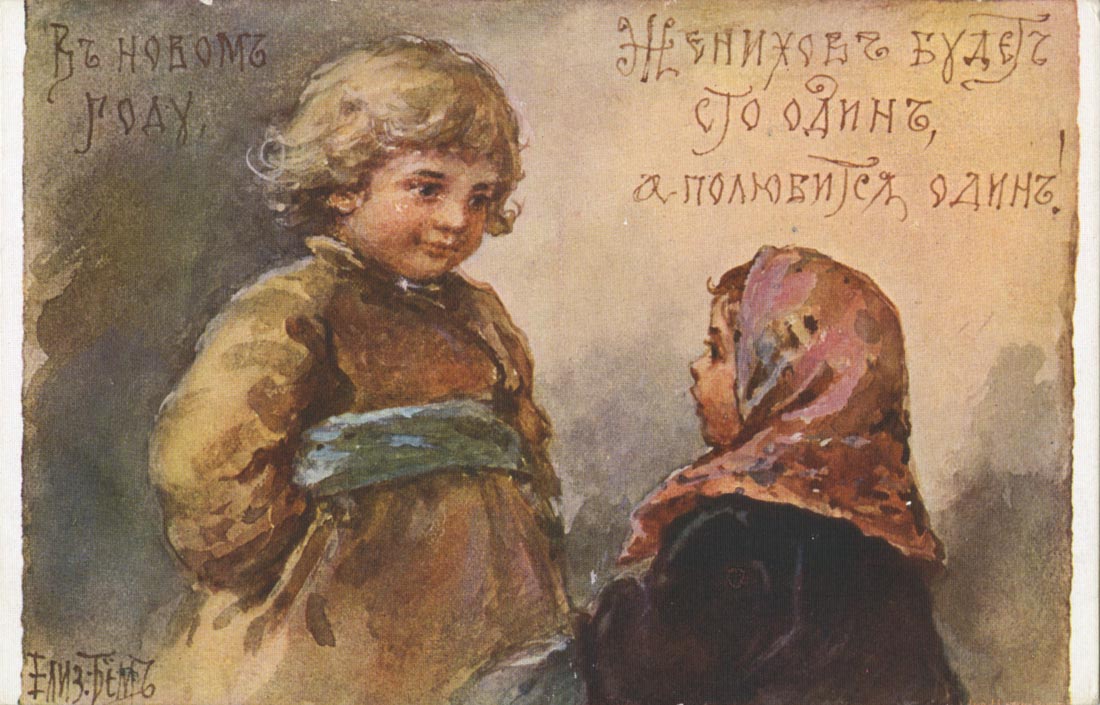
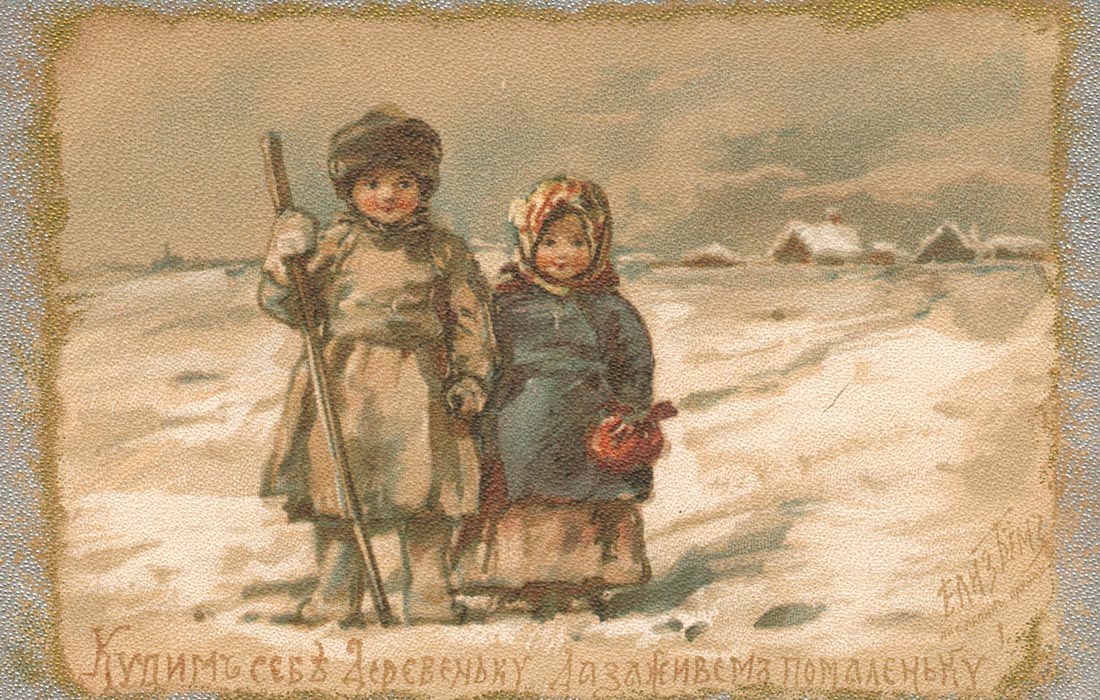
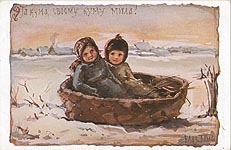
Charming winter scenes by the notable Russian artist Elisabeth Boehm or Elizaveta Bem (in Russian transcription) (1843 - 1914) appeared on Christmas and New Year's postcards at the turn-of-the-20th-century.
E.Boehm was an outstanding master of silhouette: over a fourteen-year period (1875 - 1889), she created 14 silhouette albums. Both domestic and foreign publishers reproduced her art works; Boehm won a silver medal for her silhouettes at an international competition in Brussels.
She had a great success as a watercolorist as well. In 1870 the artist took part in an art exhibition of watercolours in Paris. She was rewarded with a golden medal for the works: "Cats", "Game-bag", and "Country children". Boehm also worked on books, magazines and other illustrations, she was a successful designer of cut glass.
Elisabeth Boehm was best known for her postcards. Much of her work is based on Russian life and folklore. She produced over 300 postcard designs, mostly children for holiday greetings. Scenes of childhood had inspired the artist who created some of the most memorable children's images of her time.
At the beginning of the XX century, the famous art Russian critic Vladimir Stasov (1824-1906) wrote,
'Ms. Boehm made it her fate to discribe Russian children's world, she herself chose the theme of young individuals from all the different classes of society, from the lowest peasants, simple but lovely and interesting, to noble, aristocratic ones of the highest social and family status in many scenes of life, sometimes poetic, sometimes everyday or original, which show their souls, feelings, thoughts, characters, fads and fancies, grace, childish pranks and pieces of fun' 1.
Since the end of the 1880s, Boehm change her artistic technique from silhouettes to watercolors. The first of postcards were created by the artist for the St. Eugenia Welfare Community. This charitable institution kept a hospital, clinic and courses of Sisters of Mercy. To raise money for their maintenance, the Community released Easter envelopes for visiting cards in 1896. Subsequently, it was decided to publish open letters for the same purpose. The cards after paintings of Nikolai Karazin (1842-1908) that appeared in the Easter time of 1898, justified expectations.
'The success of this edition encouraged us to ask several well-known artists of the time for pictures for future postcards. Our appeals were met by the artists with full sympathy; we received ten watercolours for the second edition' 2, Ivan Stepanov, the St. Eugenia Community's secretary (1857-1941) recalled. Boehm was among the responded to the call, she offered two watercolours and a drawing for an envelope. The postcards were issued at A. Ilyin's establishment, under the personal supervision of Alexey Ilyin. They were printed 'so well that it was hard to distinguish the reproductions from the originals. When the cards became available for sale in December 1898, they had so huge success that the edition immediately was repeated once more.' 3

This reprint of the Christmas edition mentioned by Stepanov, took place on the eve of Easter 4, this is not surprising: the subjects of the all ten cards are quite "universal" and are not associated with a particular holiday.
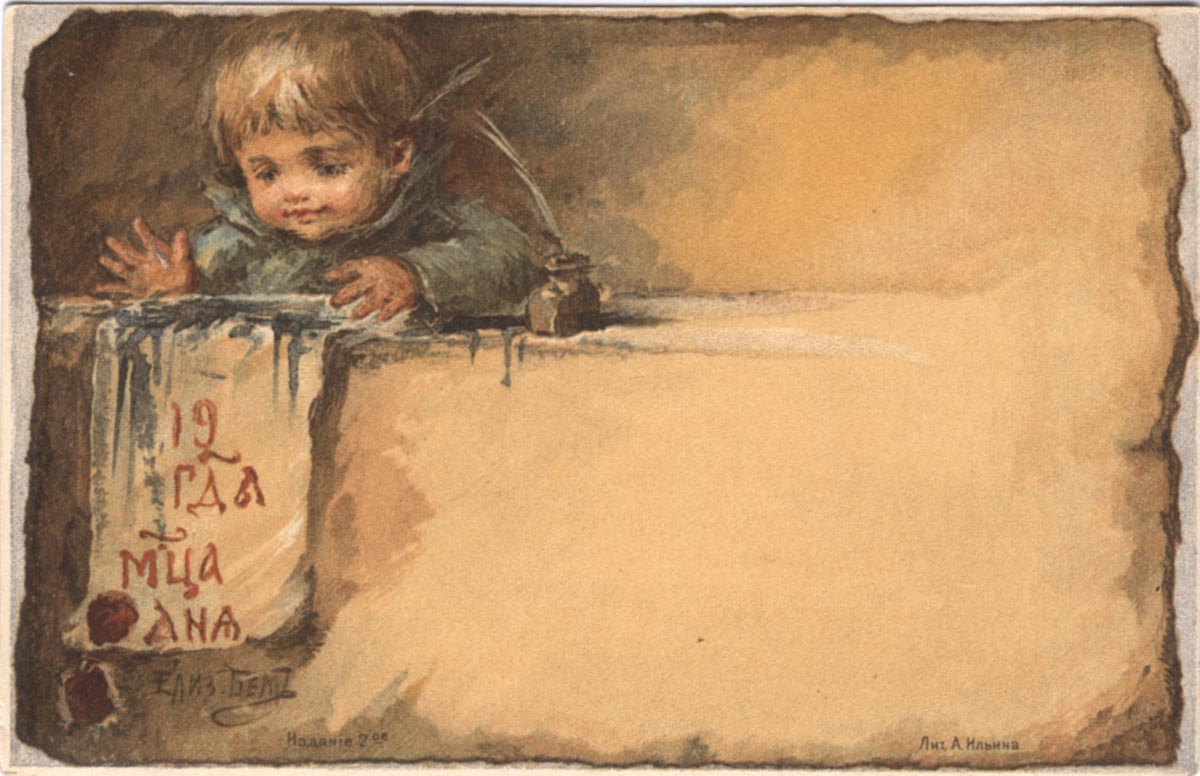
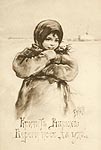
However, the first Boehm's cards were issued precisely to the Christmas and New Year holidays. 'Her two watercolour pictures «Heart-to-heart Message» and «Boy» provided a happy beginning for the publisher, received a warm welcome among the public and went through several editions'.5 Indeed, the first of the mentioned cards depicting a girl in a Russian native costume, who presses an envelope with a wax seal to her bosom, has run into at least five editions. The hero of the second card was trying to write with a quill pen, but only spilt ink on the letter. The postcard is represented in the collection of the NLR by its second edition released after 1904 in the version with a modified date on a scroll (originally the first digits of the year were "189", not "19").6
The
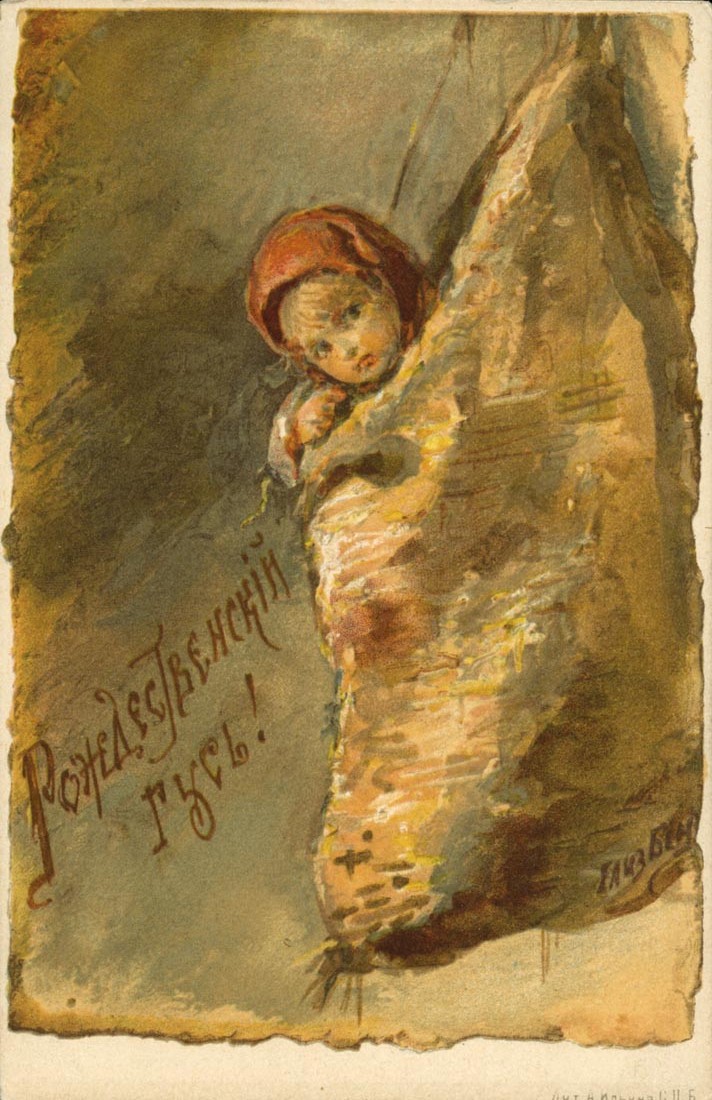
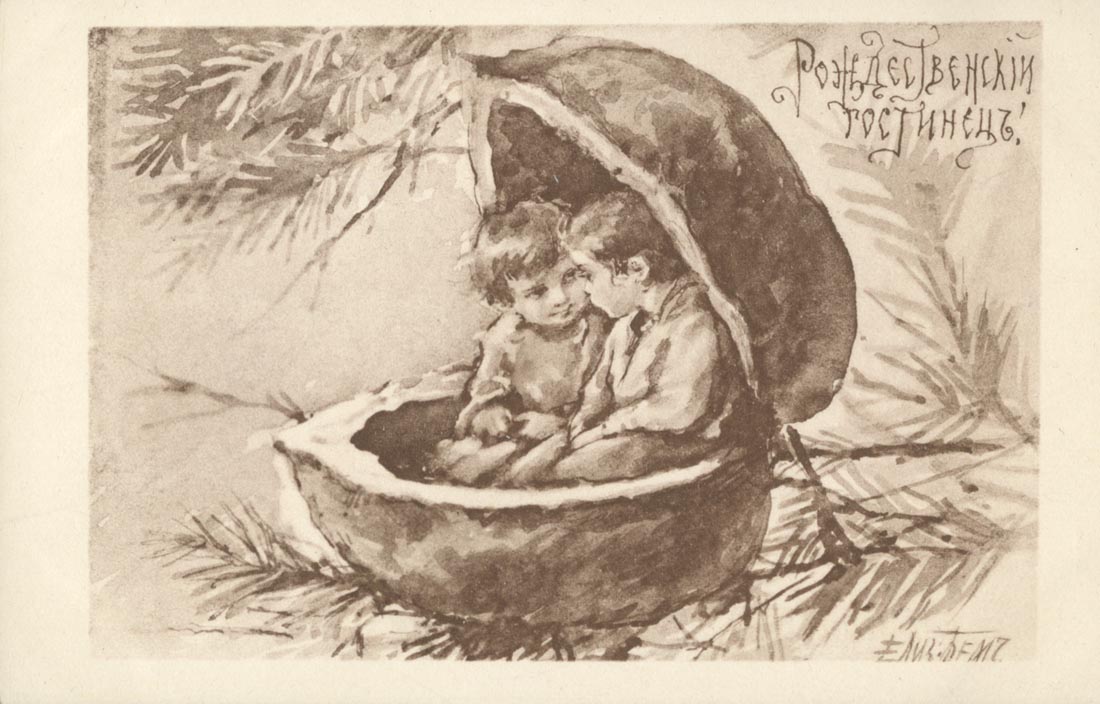
Community later published postcards that Boehm produced specially for winter holidays: for example «Christmas Goose!» of 1903 (in the picture, the goose is a girl climbed into a bag), «Christmas Gift» of 1912 (an illustrated cock-and-bull story - two children talking in an open walnut shell decorating the Christmas tree).
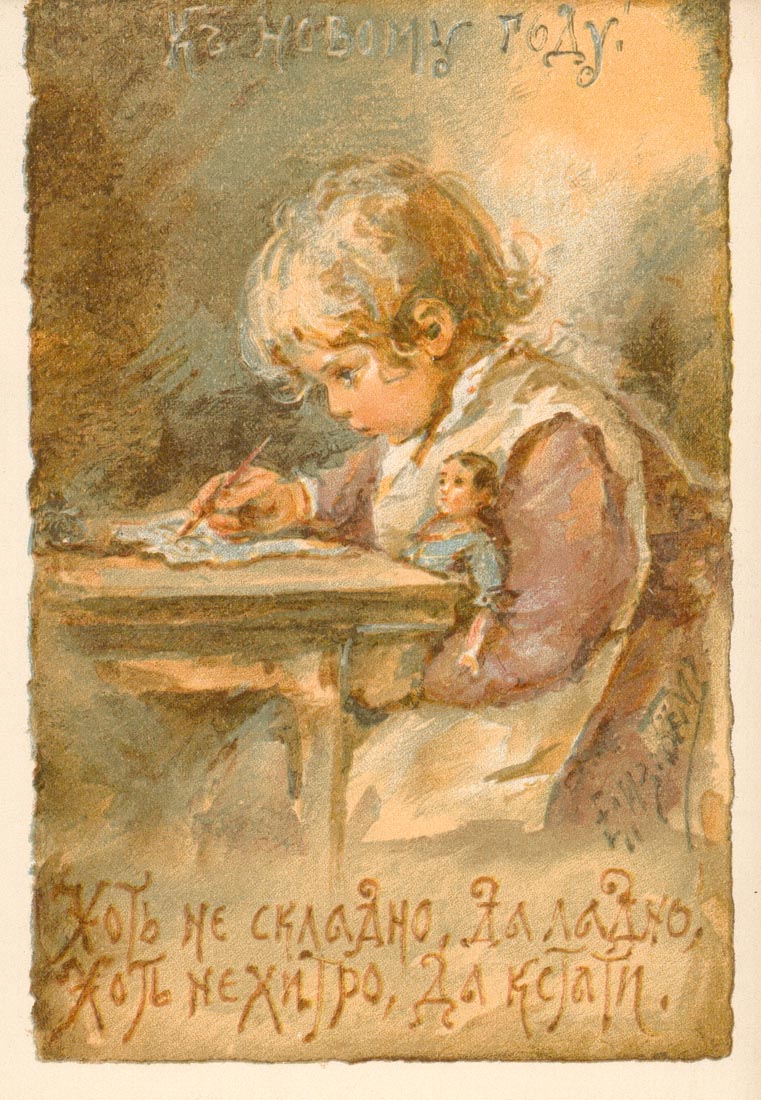
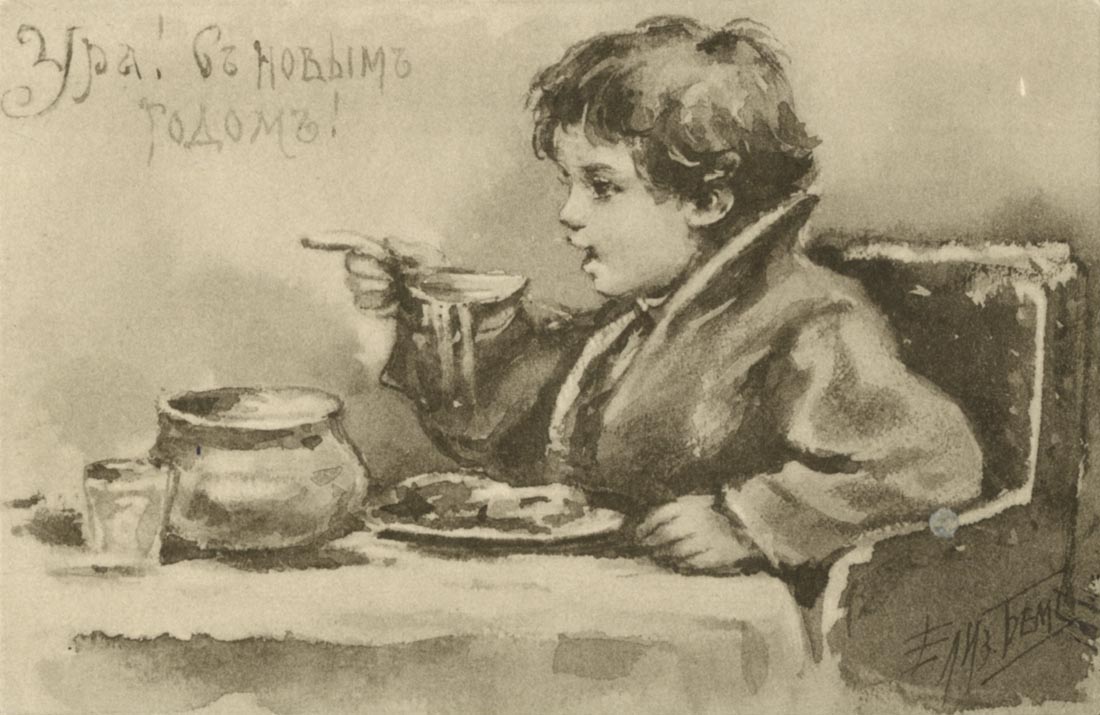
In 1903, she executed another Christmas card for the Community, which depicts a diligently writing girl. The image is accompanied by the words: «Best Wishes for a Happy New Year! The language of true friendship is made up of simple but sincere words». It is evident that the postcard was much in demand: at the exhibition, you can see its 4th edition. New Year's postcards of the artist were issued both in 1910 - «Hurrah! Happy New Year!», and in 1911 - «What special gifts the coming year brings! May your health and your love be plenty, thus your happiness will be nothing less!» (the work also proved popular, so it was re-printed even during the First World War).


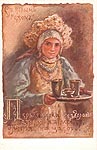
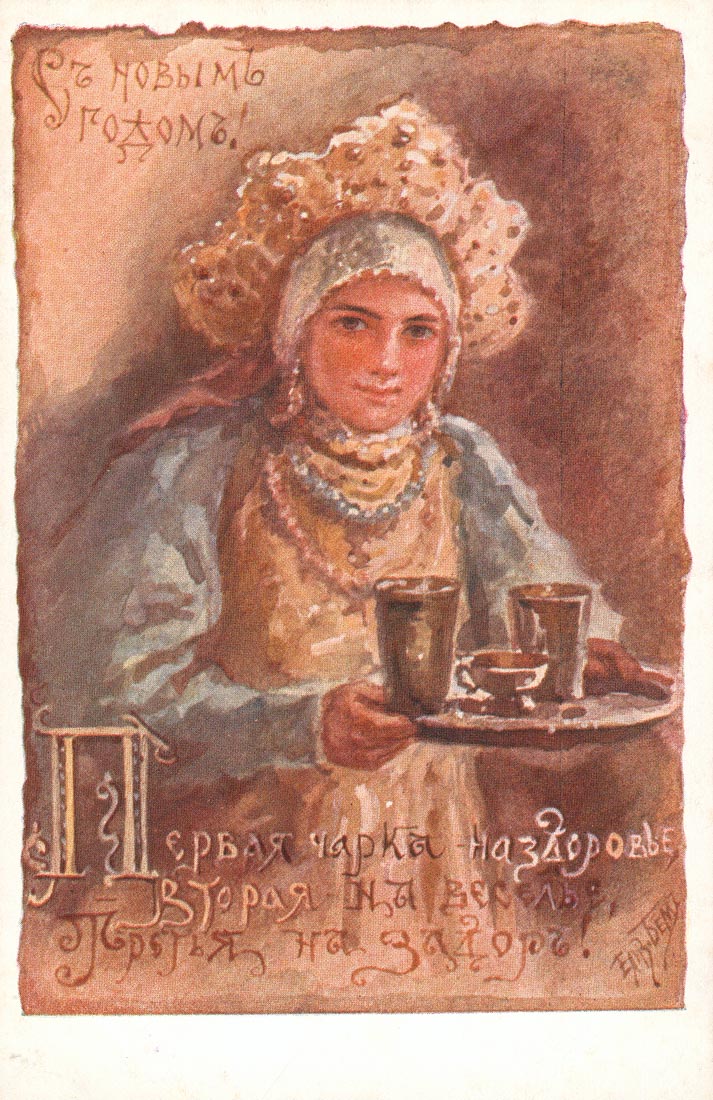
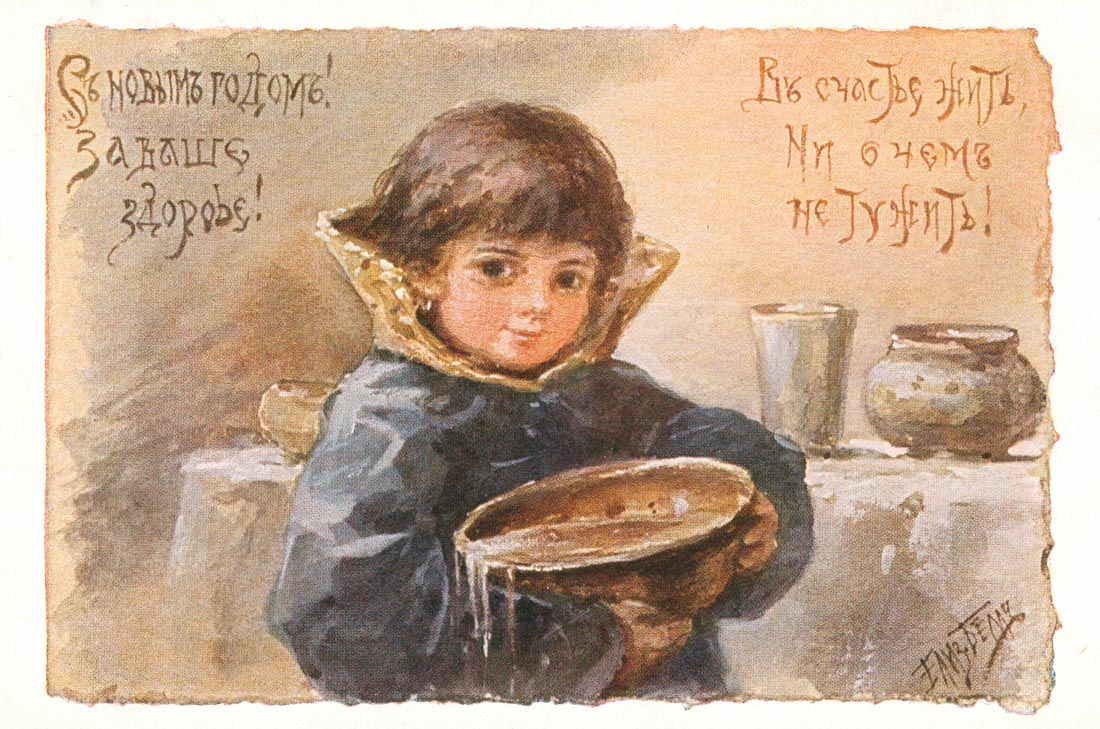
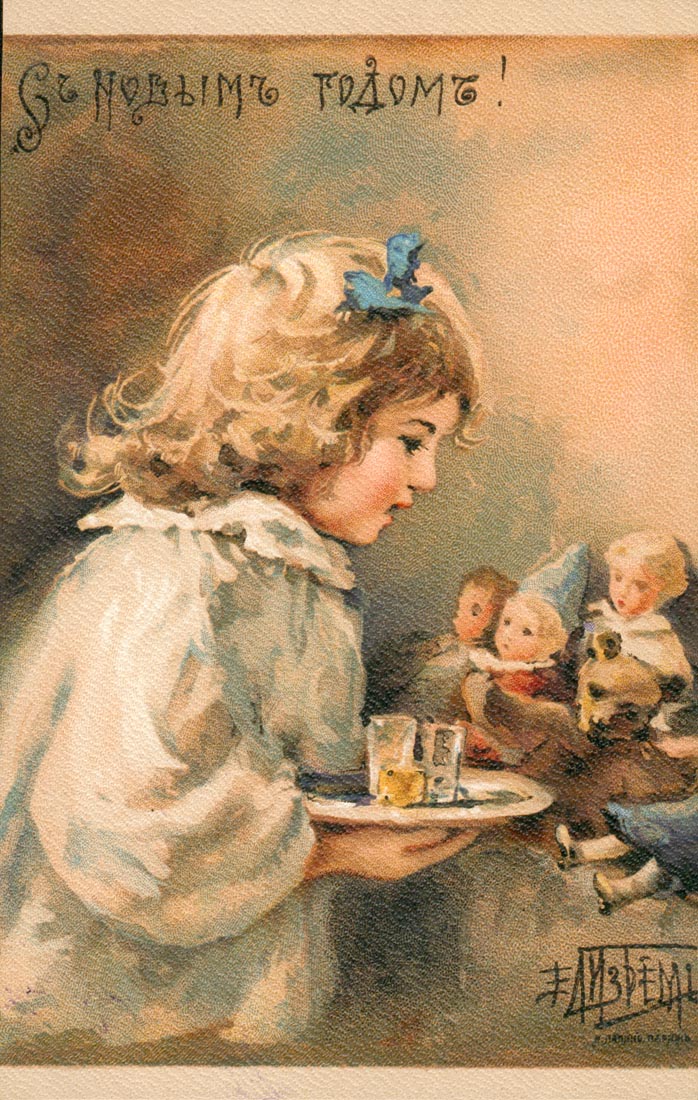
The postcard, printed in 1912, shows a Russian beauty in a national costume and rich headdress. The girl brings full cups of wine to guests. The watercolor is titled «Happy New Year! Here's a toast to health, and here's to good cheer, and here's to a full heart!». It attracts attention as one of examples of an author self-citation. 7
Almost twenty years earlier, in 1894, Stasov described the gift made for his birthday party, 'm-me Boehm has sent me a marvellouse small picture: three greetings are placed inside a large letter C: three boys in Old Russian luxury aristocratic coats, holding goblets of wine. An inscription under the top boy says: Here's a toast to health!
The middle one reads: Here's a toast to good cheer! The third greeting below is: Here's a toast to a full heart!' 8.
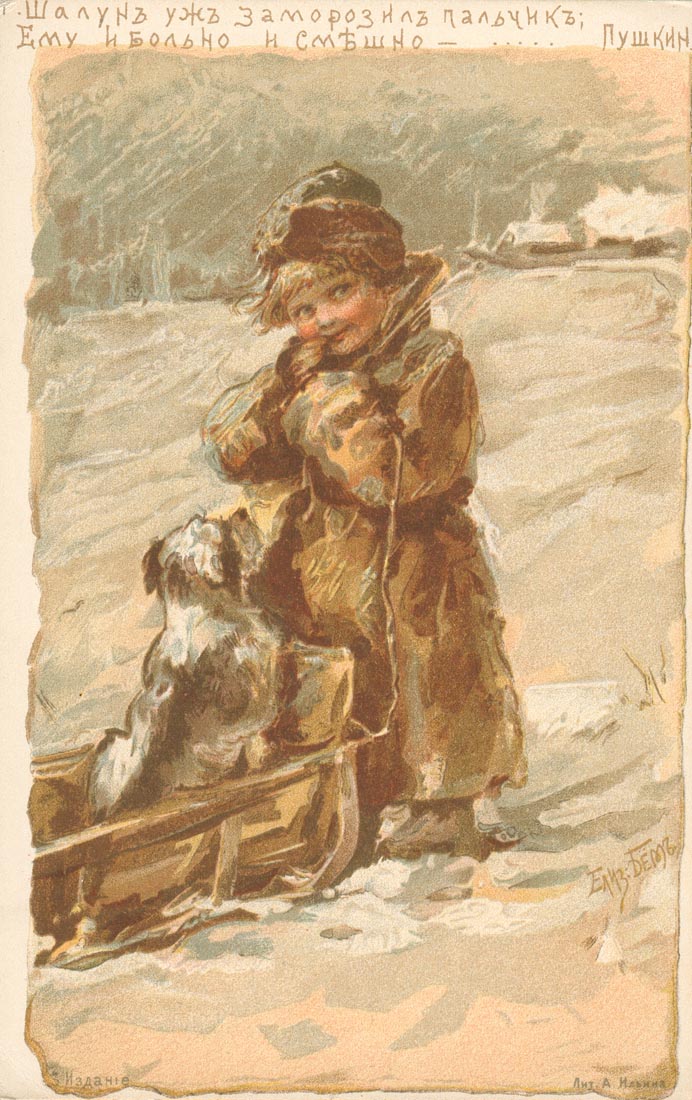
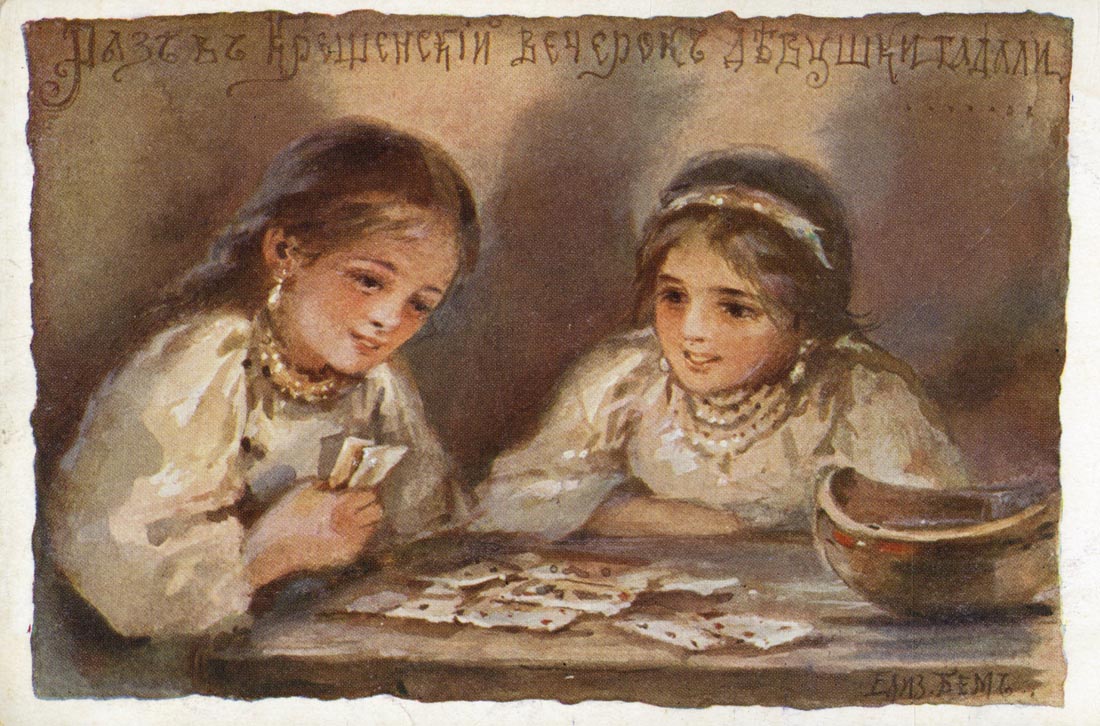
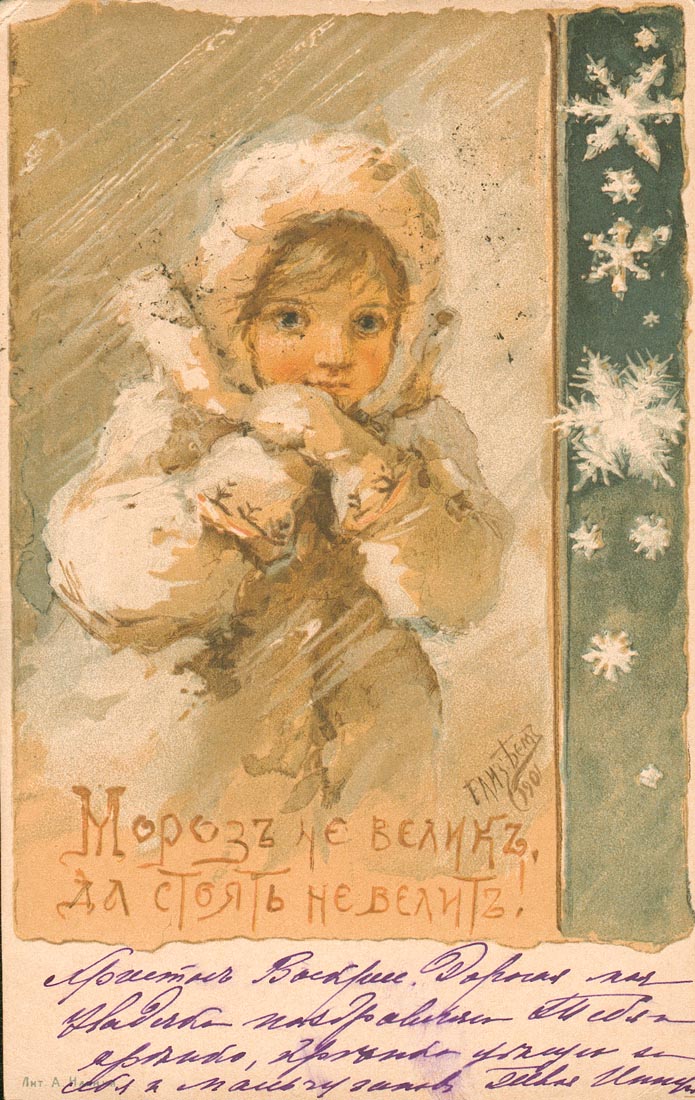
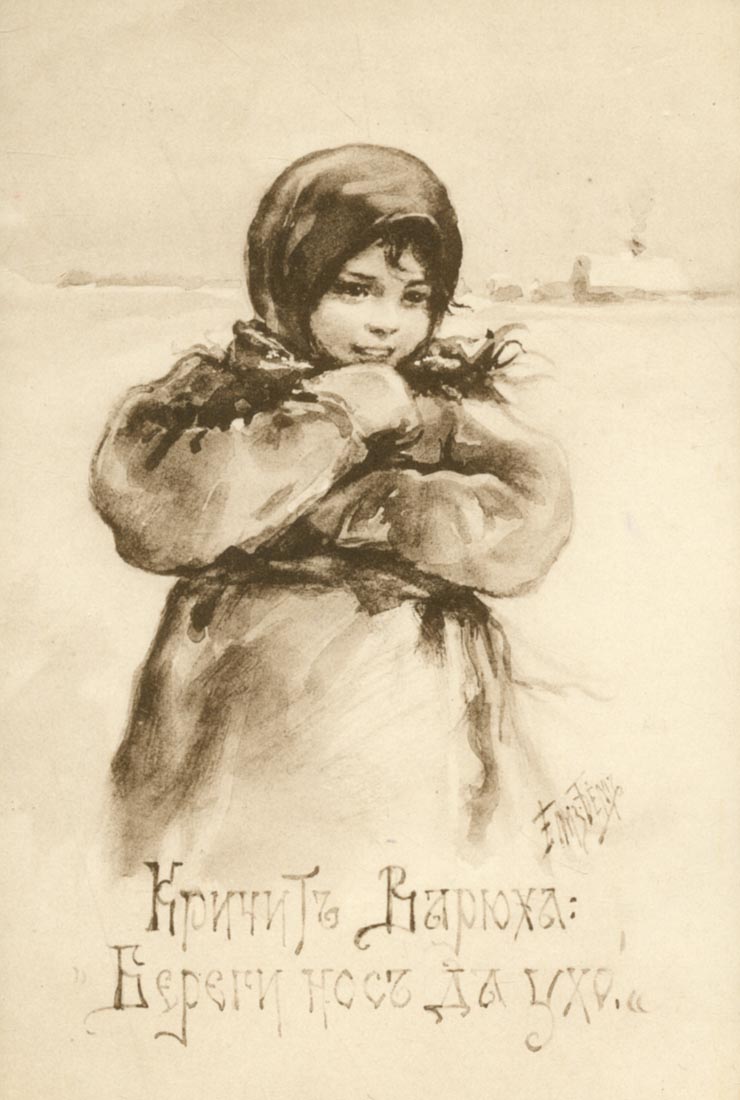
Besides holiday cards, the Community published other Boehm's winter scenes. Among the compositions created by the artist for postcards, the proper holiday cards are few, but almost every Boehm's card could be used as a greeting 9. Some of these cards were also reprinted. Several postcards are based on the literary works: for example, an illustration to the episode from Alexander Pushkin's «Eugene Onegin» “The playful child has got a finger frozen: it hurts a bit, but the game is funny and he laughs …”, which was released in 1899, in the anniversary year of Pushkin. An inscription to the card of 1908 consists of the lines “Once upon a Christmas night the girls were telling fortunes: taking their slippers off their feet and throwing them out of the gate…” from Vasily Zhukovsky's ballad «Svetlana». Other Boehm's works deal with her favorite sayings: «Falling temperatures raise spirits!» (the card «Snow Maiden», 1901), «Barbara warns: 'Take care of yourself. Better safe than sorry'» (in this postcard of 1909, Boehm slightly paraphrases an omen associated with St. Barbara's day on 17 December according the Gregorian calendar, when snow roads were hard enough to permit a sledge to glide).10
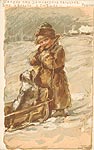
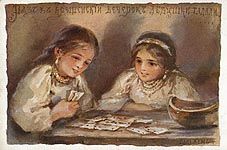
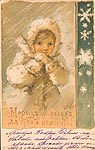
The St. Eugenia Community very highly valued Boehm as their closest collaborator and states that she 'managed to develop her own style in the depiction of various scenes from the children's lives, that's why she occupies a special place in Russian art'. 11
Other major publishers also commissioned Boehm to design postcards, among them was the Richard Publishing12 at St. Petersburg. From them, the artist also received offers to produce similar Christmas, New Year's, winter pictures. They may be titled by a literary quotation («Once upon a Christmas night the girls were telling fortunes»), or a proverb ( «Falling temperatures raise spirits!»). It is interesting that the St. Eugenia Community also published postcards of the same names, but the watercolors cannot be confused with each other. The proverbs, chosen by the author as the titles to the winter scenes, may be not related to the winter time at all («Every Jack has his Jill!»).
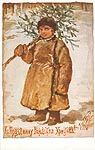
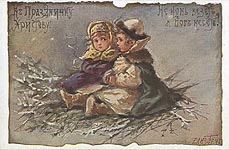
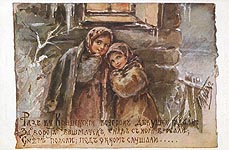
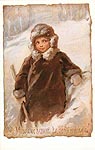
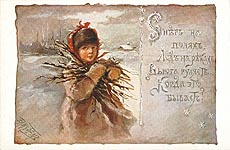
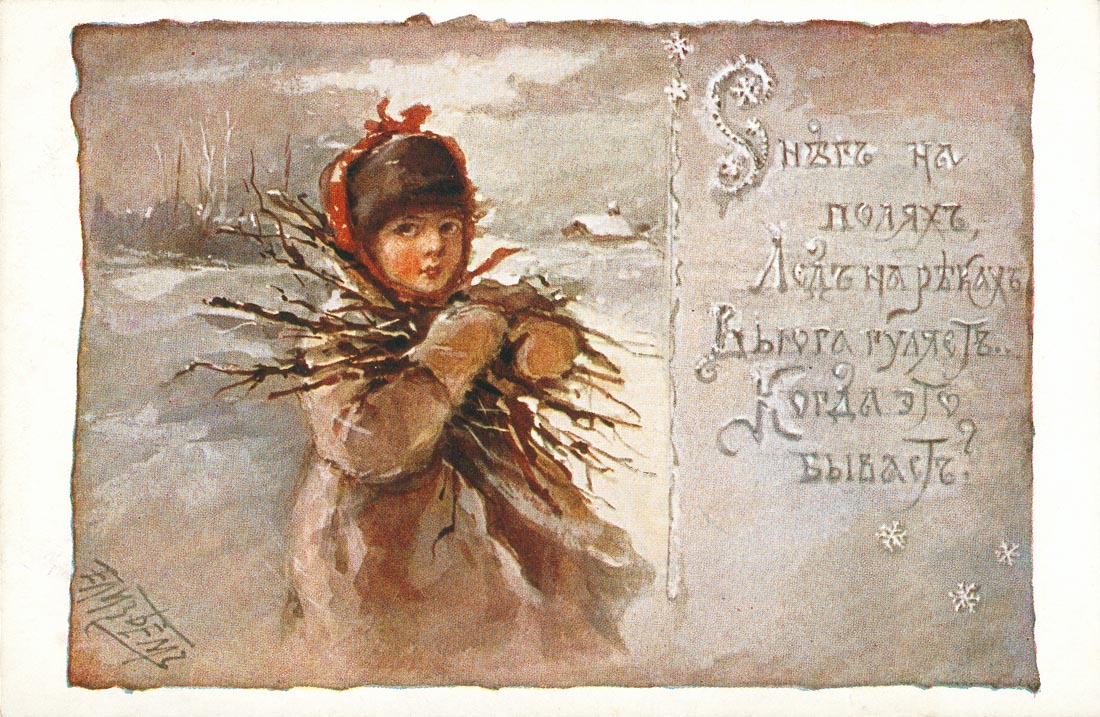
One of the examples of a riddle-postcard from the series «Seasons», stored in the NLR, has an inscription, 'What's it called when fields is under snow, rivers covered with ice, a blizzard blows…'. The card is notable for its history. The open letter with Christmas greetings was sent from St. Petersburg to Athens in December 1912. The addressee of the letter was the 9-year-old Princess Olga, the daughter of Greek Prince Nicholas and Grand Duchess Elena, a granddaughter of Grand Duke Vladimir, a son of Russian Emperor Alexander II.
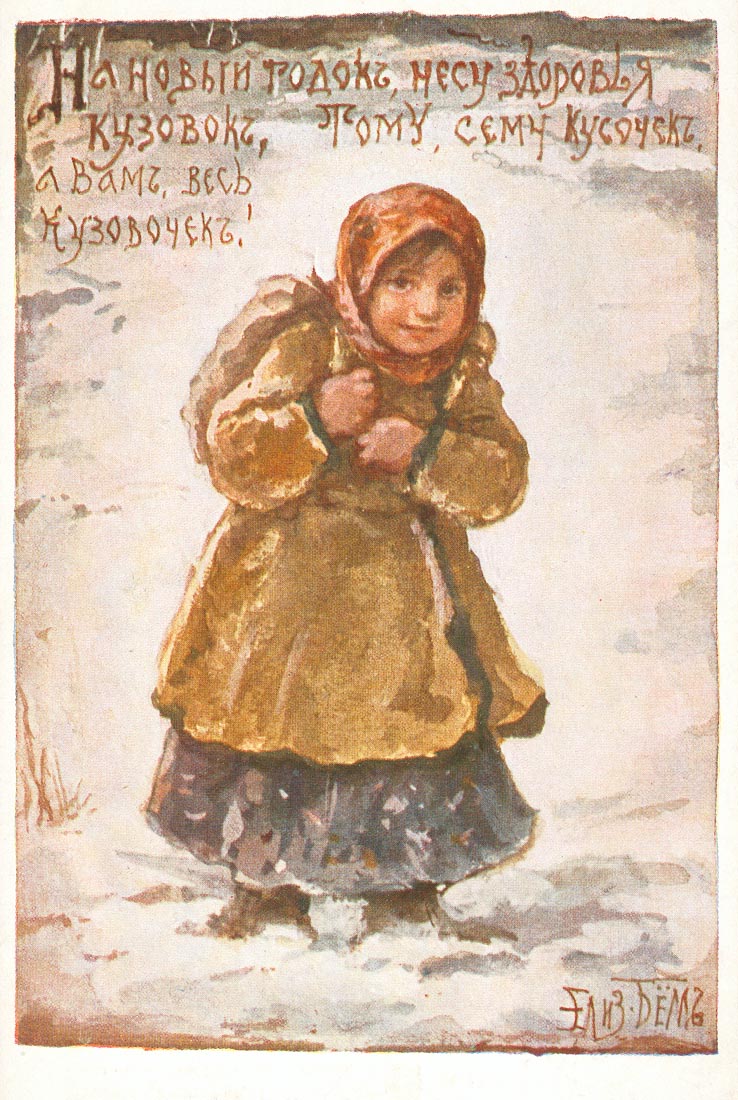
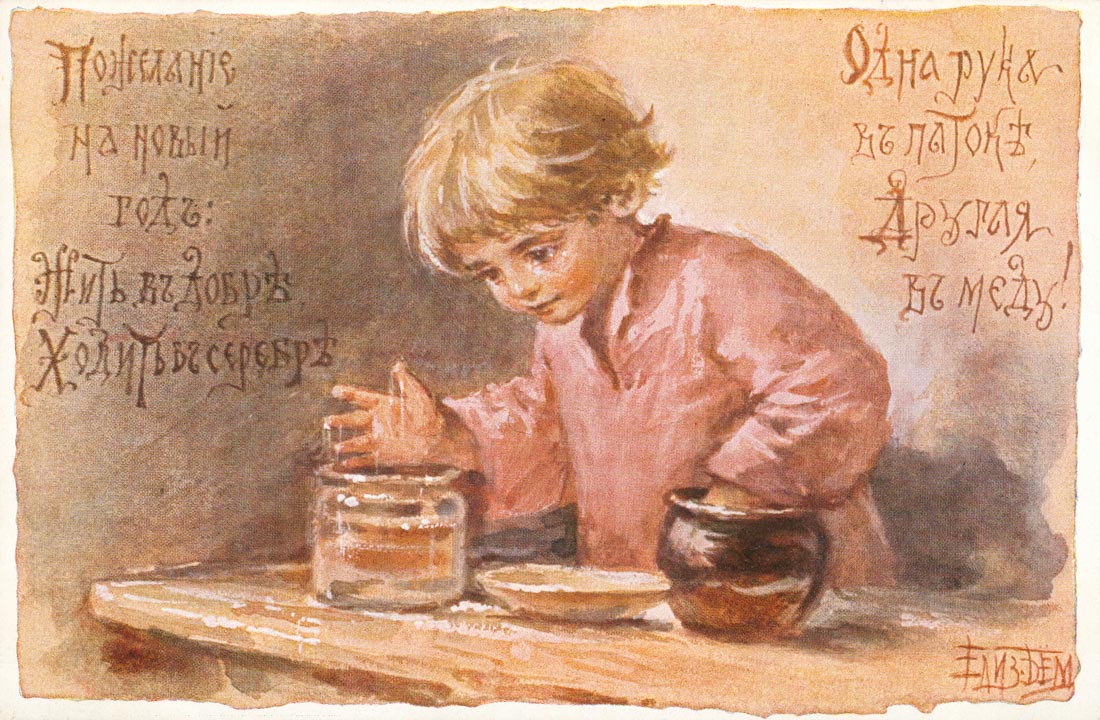
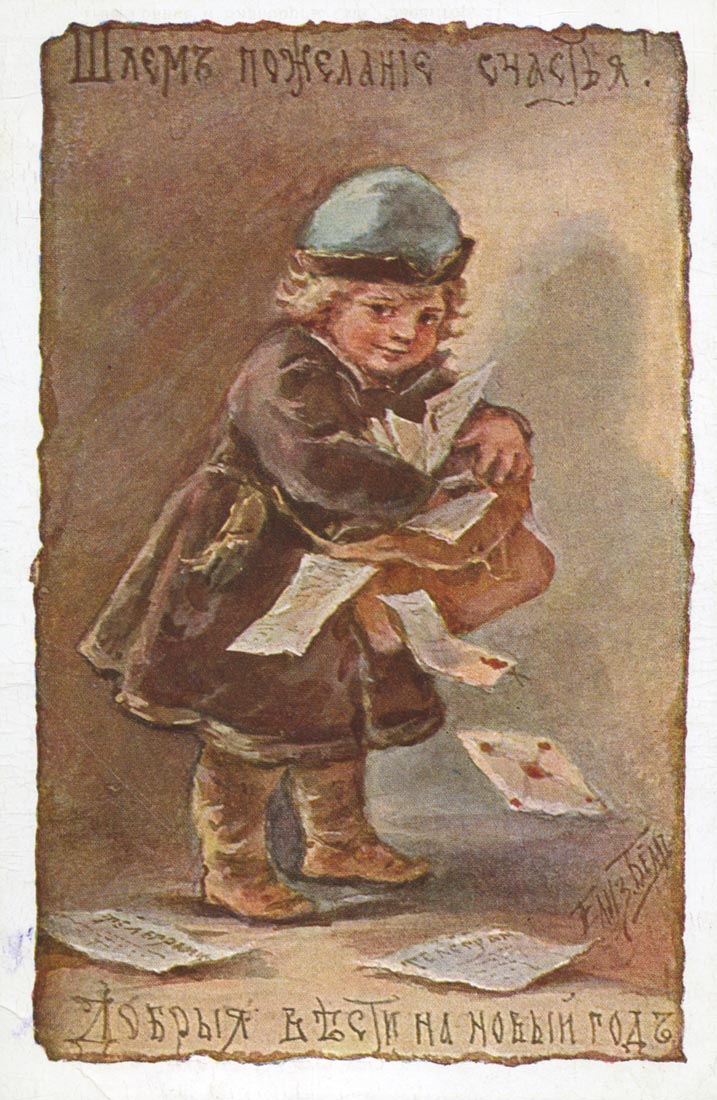
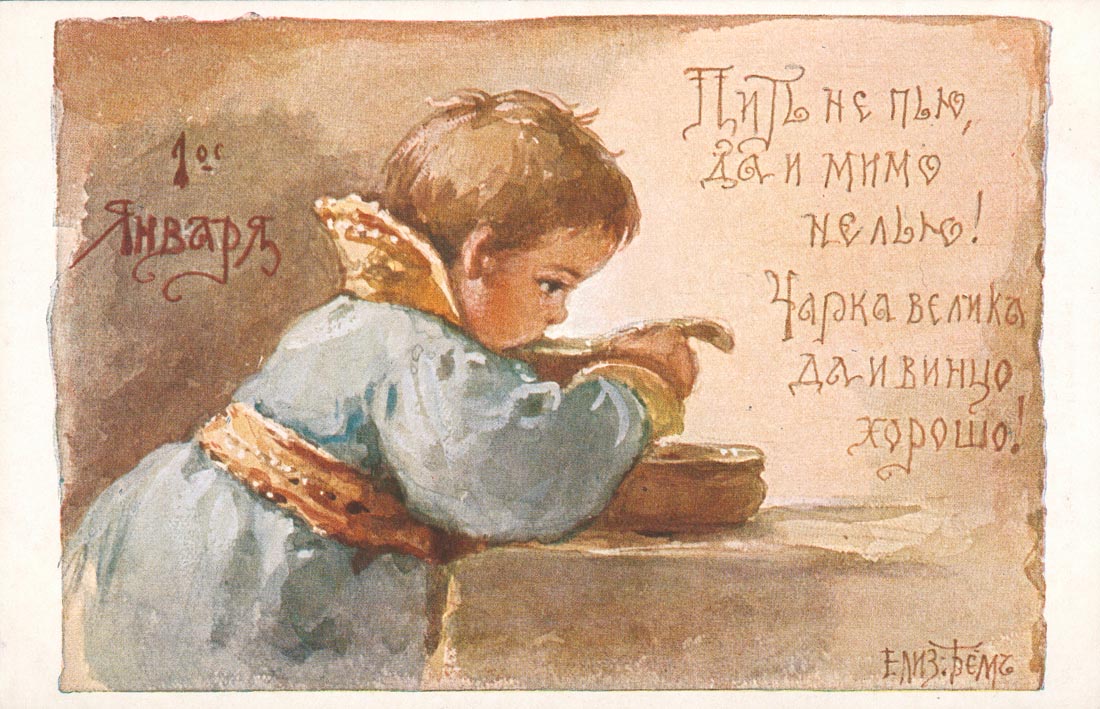
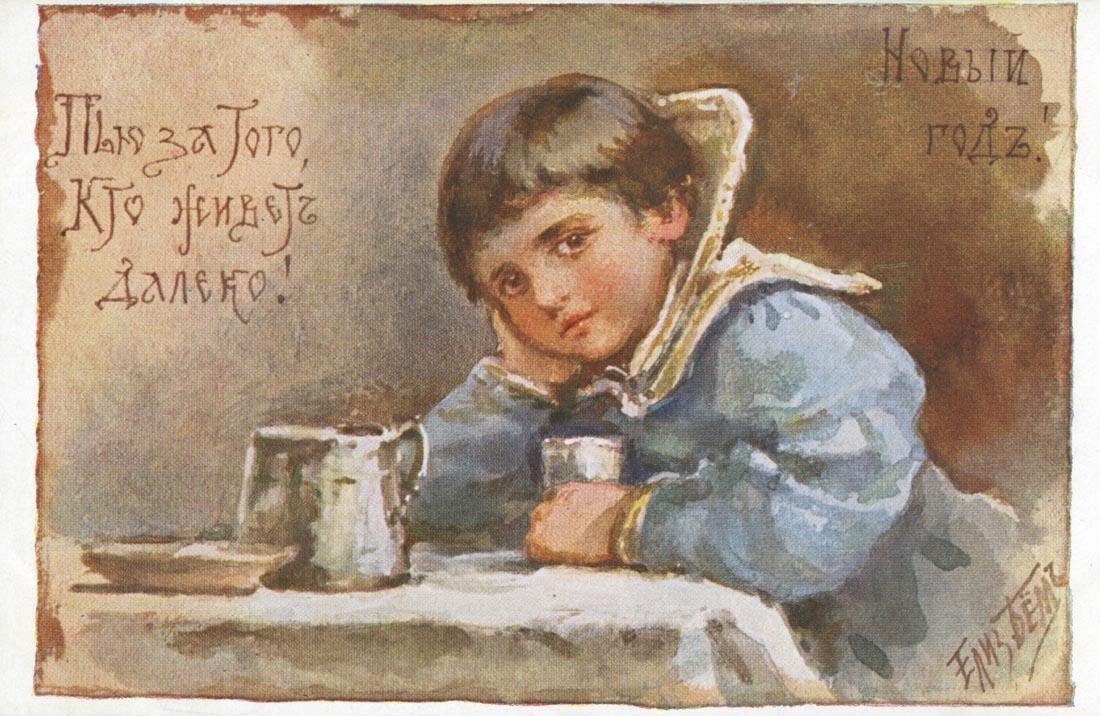
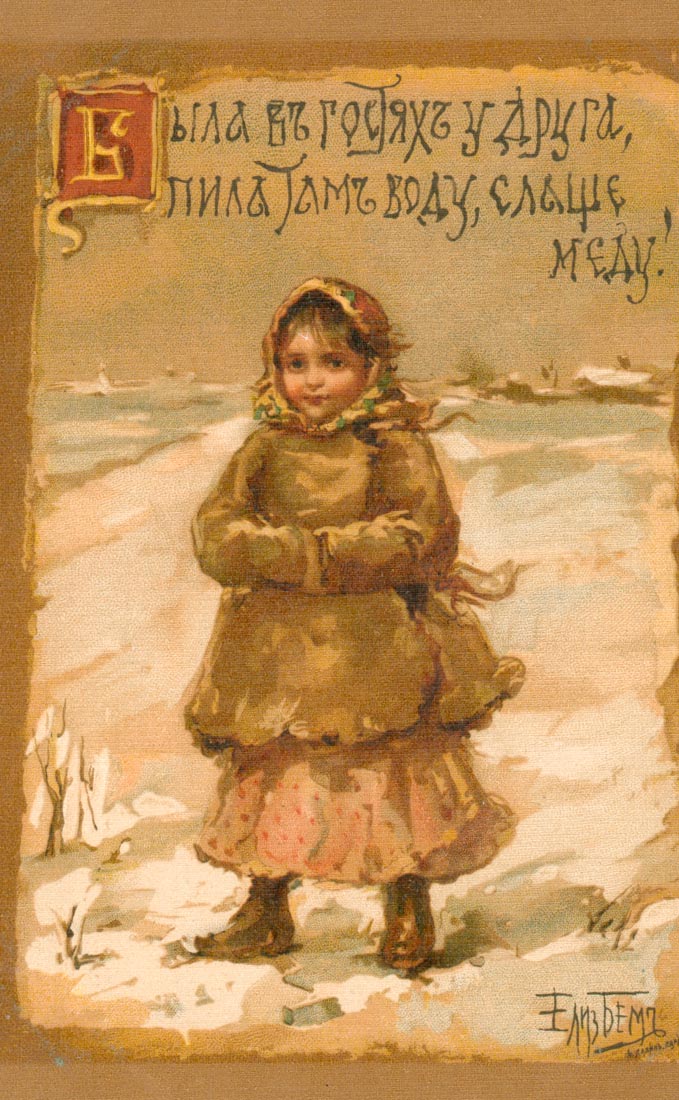
Boehm was a good hand at writing literary stylizations and compilations as New Year's greetings that the artist included in the compositions for Richard publishing house 13: «May New Year come whith a sack of health to you!», «Wishing you wealth and prosperity in the New Year! May your one hand be in honey, the other in syrup!», «Luck wishes! Good news for the new year!», «Happy New Year! To your health! Every day good luck to thee, and no day of sorrow be!». Not only the latter of mentioned cards was devoted to drinkers of unchildish beverages, there are several others too: «1st January. May your glass be ever full of good wine! A full glass must be carried steadily!», «A toast to my friend who lives far away! Happy New Year!».
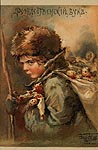
Along with the characters in historical costumes, a modern hero, infrequent for Boehm, appears on the postcard «Not Peary and Cook» of the Richard publisher house. It shows a boy dressed like a polar explorer: this image was inspired by the Arctic expeditions of 1900 and, possibly, a controversy between Americans Robert Peary and Frederick Cook of who discovered the North Pole first.
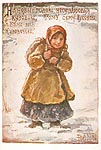
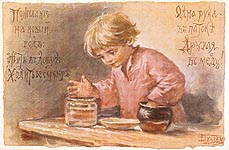
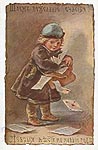


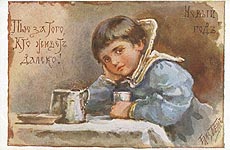
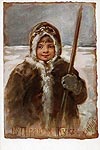
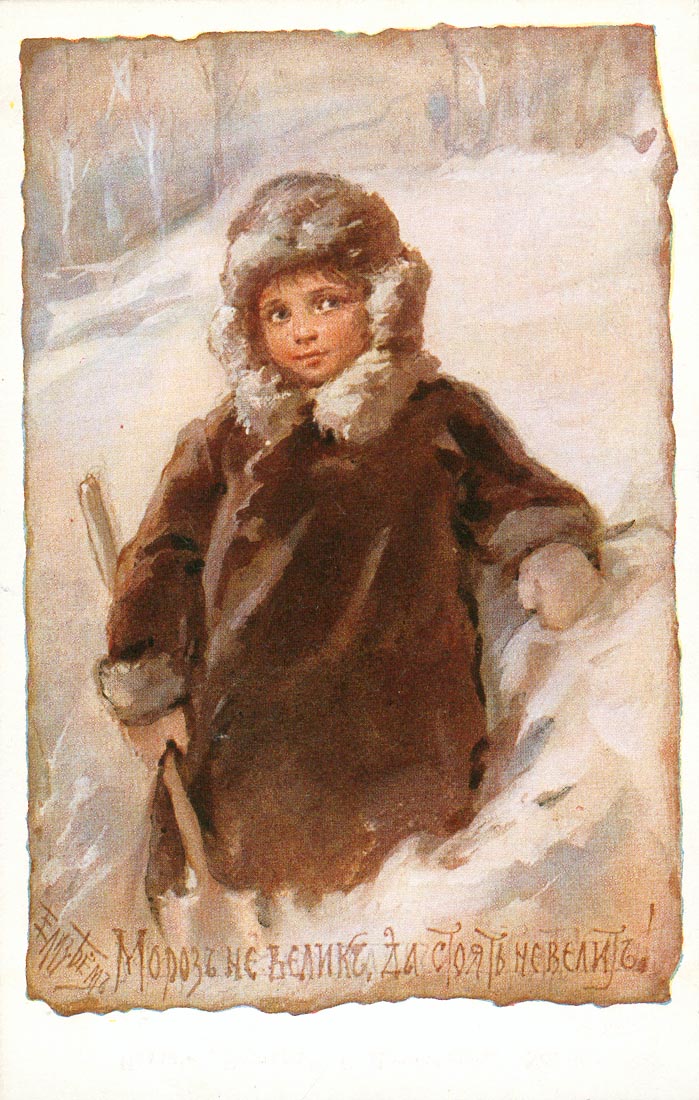
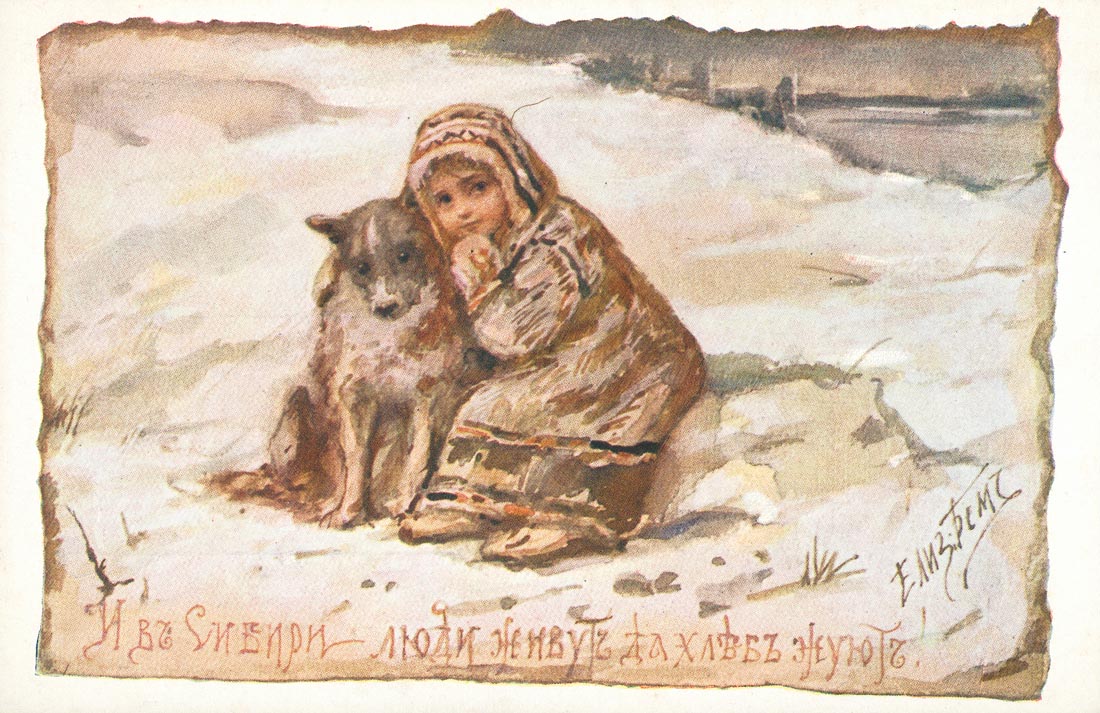
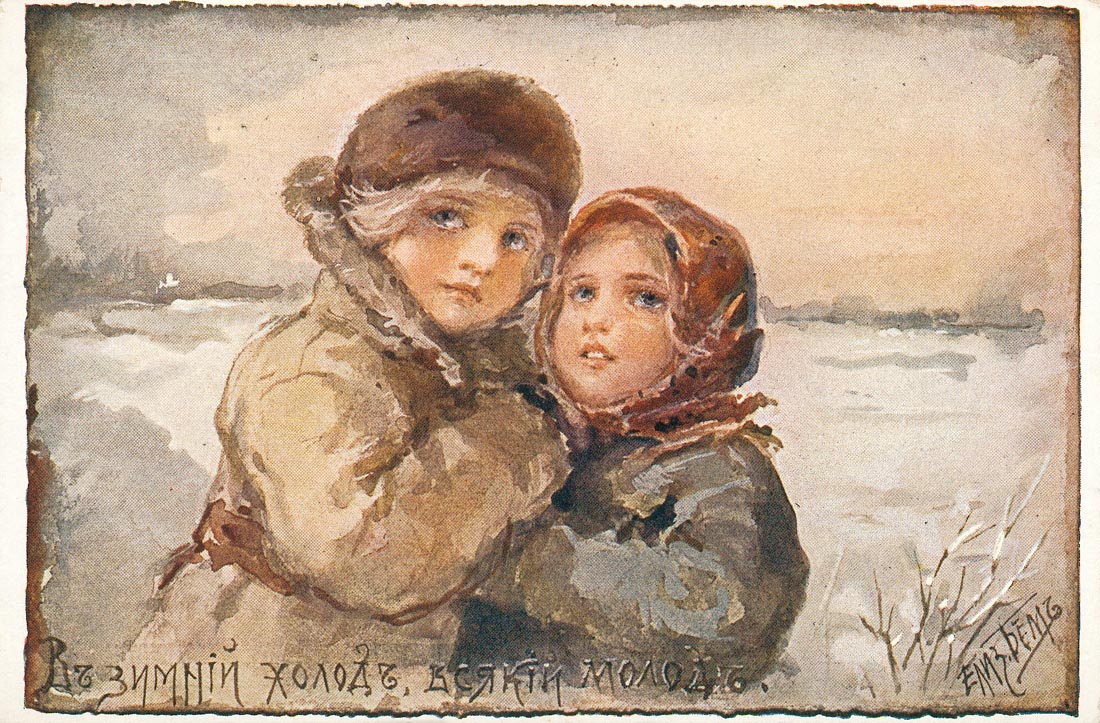
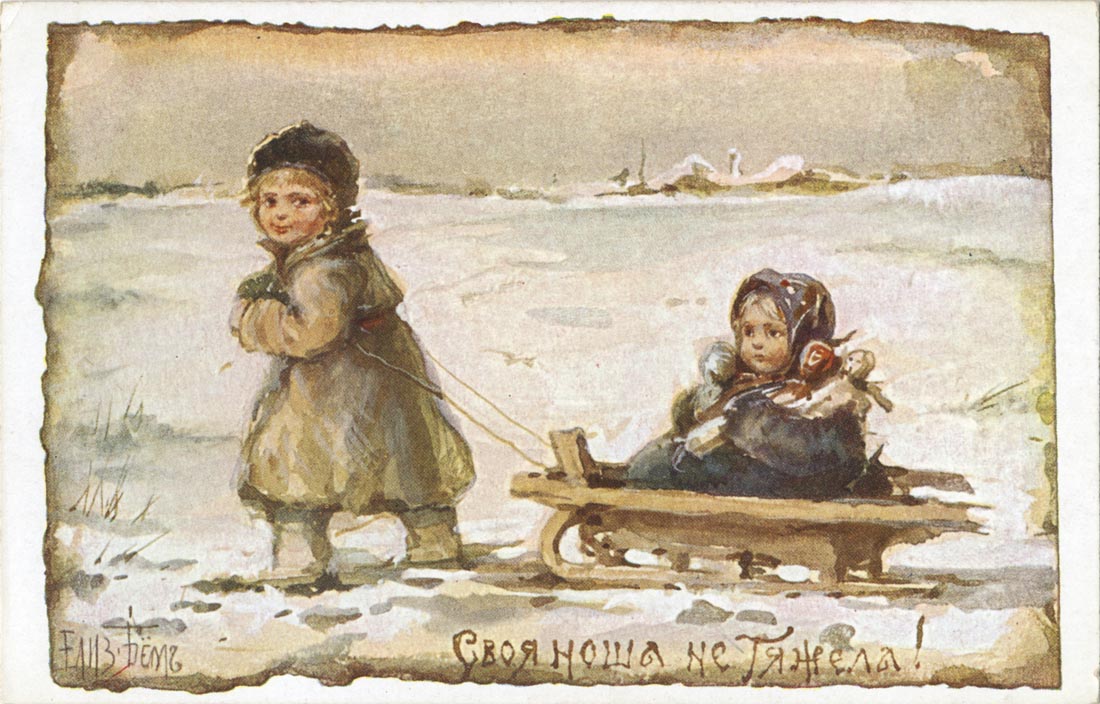
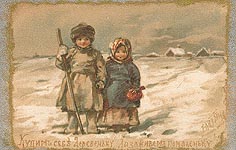
For the Moscow company of J. A. Datsiaro, Boehm worked much less. This publishing house issued very few her drawings depicting children among the snowy spaces: «Everyone feels young in a winter cold», «And people live and make their bread in Siberia too!», «A road to a friend's house is never long», «A burden of your own choice is not heavy! ».
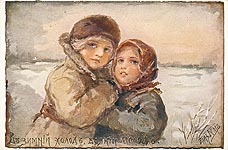
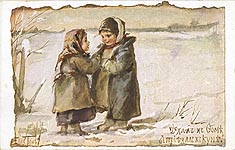
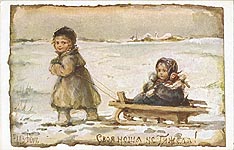
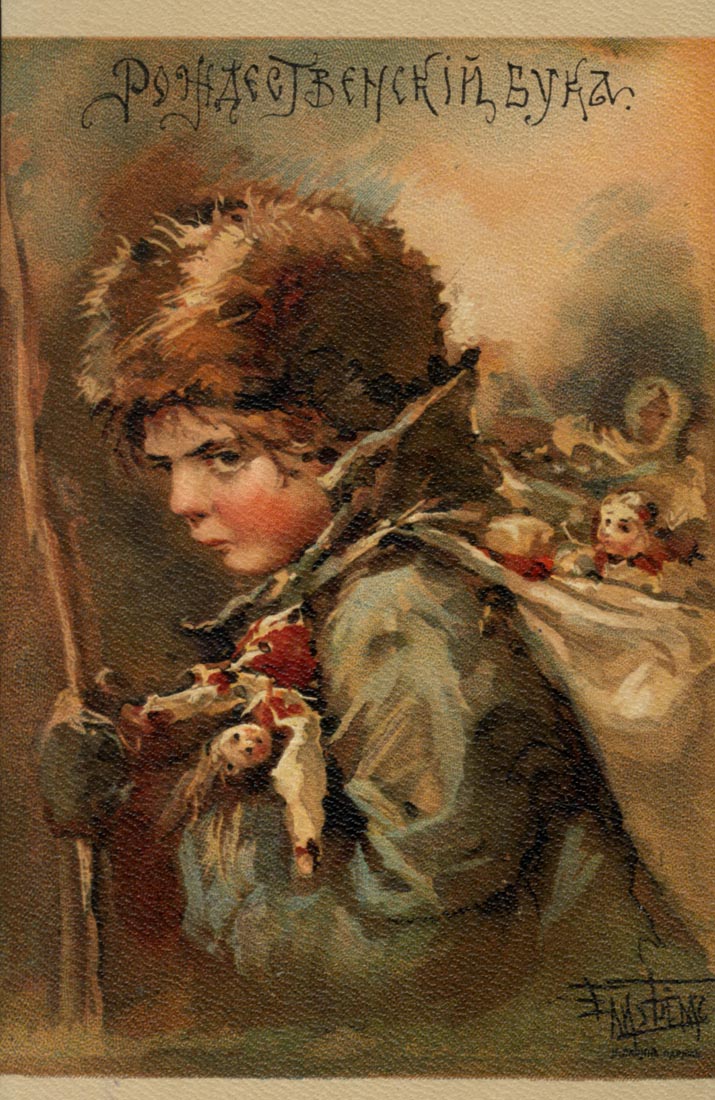
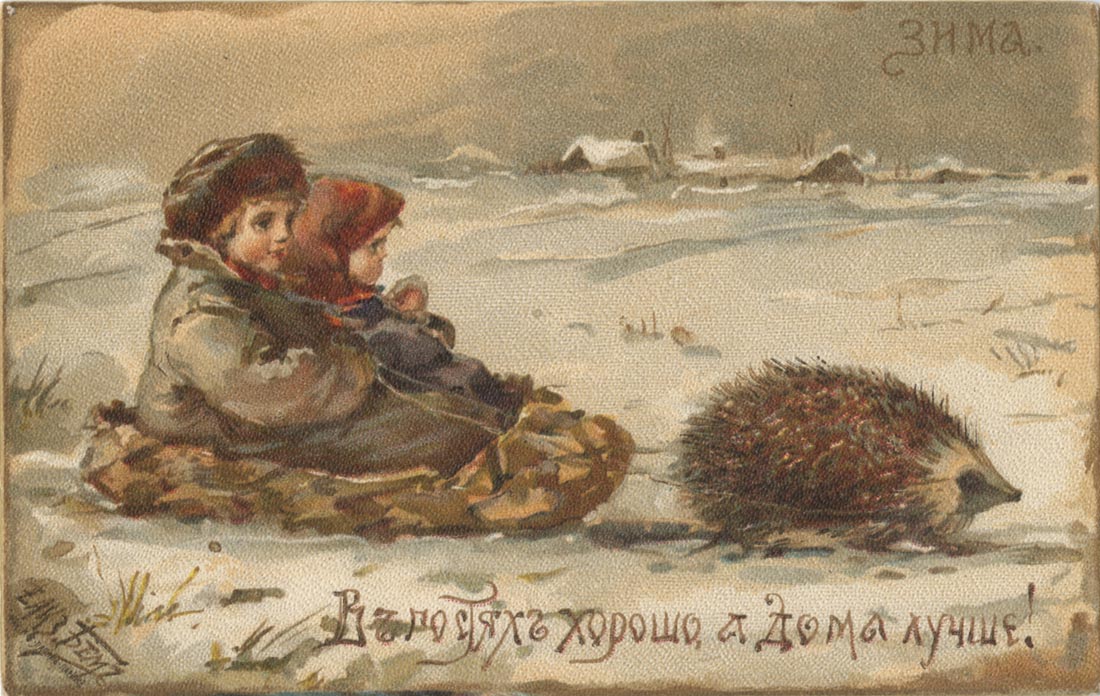
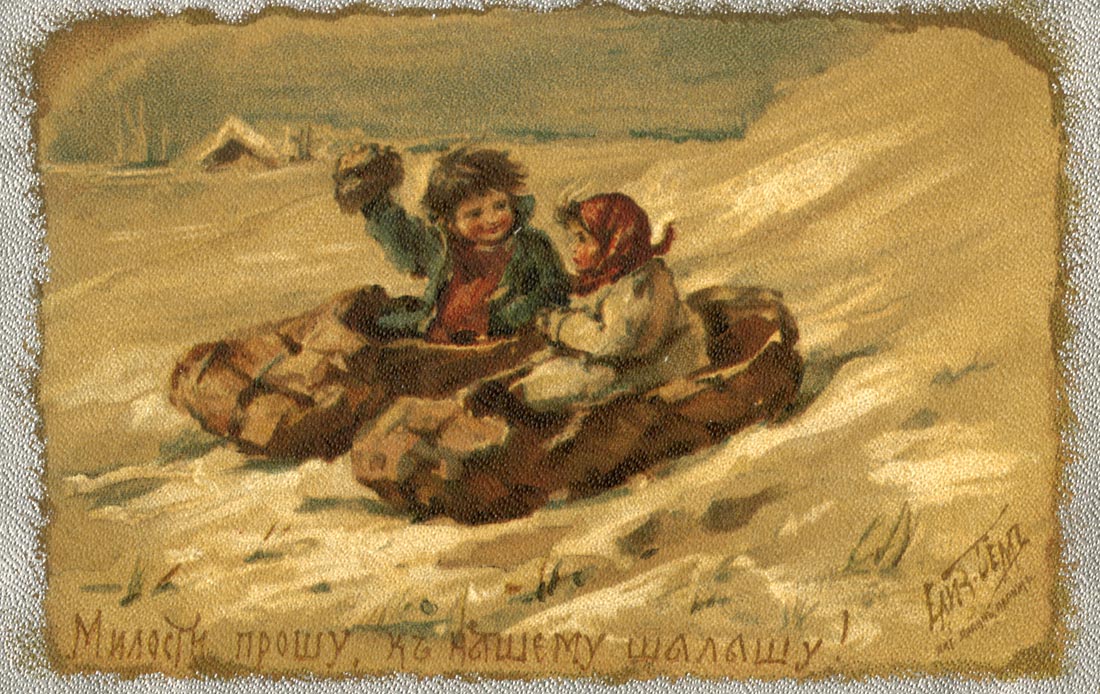
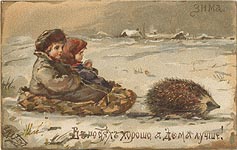
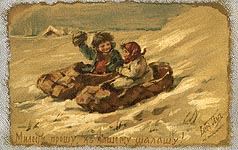
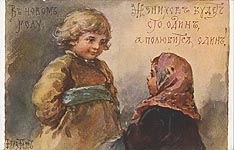
Another publisher, with whom Boehm often collaborated to create postcards, was I. Lapin. The series «L'art russe», published by his Paris firm, includes the «Christmas bogeyman», «Happy New Year!», «A friend by your side can keep you warmer than the richest furs!». Some of the cards introduced the viewer to the world of fairy tales, fables: the children are carried by a hedgehog harnessed in a bast shoe («Winter. East or West, home is best!»), they slide down a snowy slope in a bast sandal insteed of a sled («You are always welcomed in our place!»). Sometimes children play the scenes "allowing for growth", inscriptions to which are wishes to begin and arrange their family life («The mate of your choice to you!», «Walls for the wind, and a roof for the rain, and a long life free from care to you!»).


The most notable Russian art critic Stasov, who liked the 'wonderful "children's poems" of Boehm' 14 very much, predicted that 'in the future, all these numerous lovely scenes will be certainly listed with honor in the art history of our time' 15. From today's point of view, the importance of Boehm's works seems to be somewhat overestimated. However, it is obvious that Boehm took her own place in the history of Russian art of the late 19th - early 20th centuries. The name of the artist does not lose its popularity for more than a century. Boehm is known for not so much museum watercolors, as for postcards printed after her originals, in other words, for mass production which still enjoys the love of the public.
V. Stasov. Selected Works: in 3 volumes. - Moscow, 1952. - Vol. 3. - Pp. 671.
For Thirty Years : 1896-1926 / Kom. populyarizatsii khudozh. izd.(Committee for popularization of art publications). - Leningrad, 1928. - Pp. 15.
For Thirty Years : 1896-1926 / Kom. populyarizatsii khudozh. izd.(Committee for popularization of art publications). - Leningrad, 1928. - Pp. 15-16.
Reference index of art publications ... Petrograd Patronage Committee for the Red Cross Sisters : compiled on 1st January 1915. - 6th edition. - [Petrograd, 1915]. - Pp. XII.
Reference index of art publications ... Petrograd Patronage Committee for the Red Cross Sisters : compiled on 1st January 1915. - 6th edition. - [Petrograd, 1915]. - Pp. IX.
Yu. Vulfson. Illustrated catalogue of the open letters for benefit of the St.& nbsp; Eugene Community. - Moscow, 2005. – [Vol. 1]. - Pp. 6.
Elizaveta Bem = Elisabeth Bohm : The illustrated catalogue of postcards/ [text: N. Mozokhina]. - Kirov, 2012. - Pp. 41-43.
V. Stasov. Letters to relatives. - Moscow, 1958. - Vol. 2. - Pp. 444.
Elizaveta Bem = Elisabeth Bohm : The illustrated catalogue of postcards/ [text: N. Mozokhina]. - Kirov, 2012. - Pp. 38.
Large dictionary of Russian proverbs: about 70,000 proverbs/ V. Mokienko, V. Nikitina, E Nikolaeva; Intern. assoc. for teachers of Russian lang. and lit. [etc.]. - Moscow, 2010. - Pp. 106; Mesjaceslov : tradicii, obychai, primety and sovety na kazhdyj den' / [compiled by O. Stepkina]. - Moscow, 2007. - Pp. 707.
Reference index of art publications ... Petrograd Patronage Committee for the Red Cross Sisters : сост. по 1-е янв.1915 г. - 6th edition. - [Petrograd, 1915]. - Pp. IX.
Petersburg - Petrograd - Leningrad : The catalogue of photo postcards . 1895-1941 годы / [Editor-compiler: Vitaly Tretyakov]. - Saint Petersburg, 2013. - Vol. 4. - Pp. 583.
Elizaveta Bem = Elisabeth Bohm : The illustrated catalogue of postcards/ [text: N. Mozokhina]. - Kirov, 2012. - Pp. 154-156.
V. Stasov. Collected Works. 1847-1886. - Saint Petersburg, 1894. - Vol. 2. - P. 712.
V. Stasov. Selected Works: in 3 volumes - Moscow, 1952. - Vol. 3. - P. 197.
Elisabeth Boehm (1843-1914)Best Wishes for a Merry Christmas! [Graphic material] : open letter / E. Boehm. - St. Petersburg : Richard publishing house, [between 1904 and 1914] ( R. Golike & A. Vilborg Partnership). - 1 sheet : colour autotype ; 14х9 cm
View in the Digital Library
Elisabeth Boehm (1843-1914)Merry Christmas! May God hold you in the hollow of His hand! [Graphic material] : open letter / E. Boehm. - St. Petersburg : Richard publishing house, [between 1904 and 1914] ( R. Golike & A. Vilborg Partnership). - 1 sheet : colour autotype ; 8,9х14 cm
View in the Digital Library
Elisabeth Boehm (1843-1914)Christmas bogeyman [Graphic material] : open letter. - Paris : I. Lapin, [between 1904 and 1917]. - 1 sheet : chromolithograph ; 13,7х8,8 cm. - (L'art russe)
View in the Digital Library
Elisabeth Boehm (1843-1914)Christmas Goose! [Graphic material] : open letter. - [Saint Petersburg : St. Eugenia Community, 1903] (A. Ilyin's Typolithography). - 1 sheet : chromolithograph ; 14,3х9,1 cm
View in the Digital Library
Elisabeth Boehm (1843-1914)Christmas Gift! [Graphic material] : open letter. - [Saint Petersburg : St. Eugenia Community, 1912] (R. Golike & A. Vilborg Partnership). - 1 sheet : phototype ; 9х14,2 cm
View in the Digital Library
Elisabeth Boehm (1843-1914)Happy New Year! Here's a toast to health, and here's to good cheer, and here's to a full heart! [Graphic material] : open letter. - [Saint Petersburg : St. Eugenia Community, 1912] ( R. Golike & A. Vilborg Partnership). - 1 sheet : colour autotype ; 13,9х9 cm
View in the Digital Library
Elisabeth Boehm (1843-1914)What special gifts the coming year brings! May your health and your love be plenty! [Graphic material] : postcard. - 2nd edition - [Petrograd : St. Eugenia Community, between 1914 and 1917] ( R. Golike & A. Vilborg Partnership). - 1 sheet : colour autotype ; 9х14 cm
View in the Digital Library
Elisabeth Boehm (1843-1914)1st January. May your glass be ever full of good wine! A full glass must be carried steadily! [Graphic material] : open letter / E. Boehm. - St. Petersburg : Richard publishing house, [between 1904 and 1914] ( R. Golike & A. Vilborg Partnership). - 1 sheet : colour autotype ; 9х14 cm
View in the Digital Library
Elisabeth Boehm (1843-1914)Wishing you wealth and prosperity in the New Year! May your one hand be in honey, the other in syrup! [Graphic material] : open letter / E. Boehm. - St. Petersburg : Richard publishing house, [between 1904 and 1914] ( R. Golike & A. Vilborg Partnership). - 1 sheet : colour autotype ; 9,1х13,9 cm
View in the Digital Library
Elisabeth Boehm (1843-1914)Happy New Year! To your health! Every day good luck to thee, and no day of sorrow be! [Graphic material] : open letter / E. Boehm. - St. Petersburg : Richard publishing house, [between 1904 and 1914] ( R. Golike & A. Vilborg Partnership). - 1 sheet : colour autotype ; 9х13,9 cm
View in the Digital Library
Elisabeth Boehm (1843-1914)May New Year come whith a sack of health to you! [Graphic material] : open letter / E. Boehm. - St. Petersburg : Richard publishing house, [between 1904 and 1914] ( R. Golike & A. Vilborg Partnership). - 1 sheet : colour autotype ; 14х9 cm
View in the Digital Library
Elisabeth Boehm (1843-1914)Best Wishes for a Happy New Year! The language of true friendship is made up of simple but sincere words. [Graphic material] : open letter. - 4-е edition. - [Saint Petersburg : St. Eugenia Community, between 1904 and 1914] (A. Ilyin's Typolithography). - 1 sheet : chromolithograph ; 14,1х9,3 cm
View in the Digital Library
Elisabeth Boehm (1843-1914)Happy New Year! [Graphic material] : open letter. - Paris : I. Lapin, [between 1904 and 1917]. - 1 sheet : chromolithograph ; 13,7х8,7 cm. - (L'art russe)
View in the Digital Library
Elisabeth Boehm (1843-1914)The mate of your choice to you! [Graphic material] : [открытка]. - [Paris] : I. Lapin's firm, [between 1904 and 1917]. - 1 sheet : colour autotype ; 8,8х13,7 cm
View in the Digital Library
Elisabeth Boehm (1843-1914)Luck wishes! Good news for the new year! Добрые вести на Happy New Year [Graphic material] : open letter / E. Boehm. - St. Petersburg : Richard publishing house, [between 1904 and 1914] ( R. Golike & A. Vilborg Partnership). - 1 sheet : colour autotype ; 14,2х9,2 cm
View in the Digital Library
Elisabeth Boehm (1843-1914)Hurrah! Happy New Year! [Graphic material] : open letter. - [Saint Petersburg : St. Eugenia Community, 1910] ( R. Golike & A. Vilborg Partnership). - 1 sheet : phototype ; 9х13,8 cm
View in the Digital Library
Elisabeth Boehm (1843-1914)A toast to my friend who lives far away! [Graphic material] : Happy New Year! : open letter / E. Boehm. - St. Petersburg : Richard publishing house, [between 1904 and 1914] ( R. Golike & A. Vilborg Partnership). - 1 sheet : colour autotype ; 8,9х14 cm
View in the Digital Library
Elisabeth Boehm (1843-1914)Seasons [Graphic material] = Jahreszeiten : Снег на полях, Лед на реках, Вьюга гуляет… Когда это бывает? : open letter / E. Boehm. - St. Petersburg : Richard publishing house, [between 1904 and 1912] ( R. Golike & A. Vilborg Partnership). - 1 sheet : colour autotype ; 9,3х14 cm
View in the Digital Library
Elisabeth Boehm (1843-1914)Falling temperatures raise spirits! [Graphic material] : [Snow Maiden] : open letter. - [Saint Petersburg : St. Eugenia Community, 1901] (A. Ilyin's Typolithography). - 1 sheet : chromolithograph ; 14,3х9,1 cm
View in the Digital Library
Elisabeth Boehm (1843-1914)The playful child has got a finger frozen; it hurts a bit, but the game is funny and he laughs…” - ..... Alexander Pushkin. «Eugene Onegin» [Graphic material] : open letter. - 3-е edition. - [Saint Petersburg : St. Eugenia Community, between 1904 and 1914] (A. Ilyin's Typolithography). - 1 sheet : chromolithograph ; 14,3х9,2 cm
View in the Digital Library
Elisabeth Boehm (1843-1914)Everyone feels young in a winter cold [Graphic material] : open letter. - [Moscou] : J. D. M., [between 1904 and 1917]. - 1 sheet : colour autotype ; 9,2х14 cm
View in the Digital Library
Elisabeth Boehm (1843-1914)And people live and make their bread in Siberia too! [Graphic material] : open letter. - [Without place : without publisher, between 1904 and 1917]. - 1 sheet : colour autotype ; 9,1х14 cm
View in the Digital Library
Elisabeth Boehm (1843-1914)Walls for the wind, and a roof for the rain, and a long life free from care to you! [Graphic material] : open letter. - Paris : I. Lapin's firm (Maison Lapine of Paris), [between 1904 and 1917]. - 1 sheet : chromolithograph ; 8,8х13,7 cm
View in the Digital Library
Elisabeth Boehm (1843-1914)A friend by your side can keep you warmer than the richest furs! [Graphic material] : open letter. - Paris : I. Lapin, [between 1904 and 1917]. - 1 sheet : chromolithograph ; 13,9х8,8 cm. - (L'art russe)
View in the Digital Library
Elisabeth Boehm (1843-1914)Falling temperatures raise spirits! [Graphic material] : open letter / E. Boehm. - St. Petersburg : Richard publishing house, [between 1904 and 1914]. - 1 sheet : colour autotype ; 14,1х9 cm
View in the Digital Library
Elisabeth Boehm (1843-1914)Winter. East or West, home is best! [Graphic material] : open letter. - Paris : I. Lapin's firm (Maison Lapine of Paris), [between 1904 and 1917]. - 1 sheet : chromolithograph ; 8,9х14 cm
View in the Digital Library
Elisabeth Boehm (1843-1914)A road to a friend's house is never long [Graphic material] : open letter / E. Boehm. - [Moscow] : J.D.M. publisher, [between 1904 and 1917]. - 1 sheet : colour autotype ; 8,8х13,9 cm
View in the Digital Library
Elisabeth Boehm (1843-1914)A burden of your own choice is not heavy! [Graphic material] : open letter / E. Boehm. - [Moscow] : J.D.M. publisher, [between 1904 and 1917]. - 1 sheet : colour autotype ; 8,9х13,8 cm
View in the Digital Library
Elisabeth Boehm (1843-1914)Every Jack has his Jill! [Graphic material] : open letter / E. Boehm. - St. Petersburg : Richard publishing house, [between 1904 and 1914] ( R. Golike & A. Vilborg Partnership). - 1 sheet : colour autotype ; 9,1х14 cm
View in the Digital Library
Elisabeth Boehm (1843-1914)You are always welcomed in our place! [Graphic material] : open letter. - Paris : I. Lapin's firm (Maison Lapine of Paris), [between 1904 and 1917]. - 1 sheet : chromolithograph ; 9х14,3 cm
View in the Digital Library
Elisabeth Boehm (1843-1914)Neither Peary, nor Cook [Graphic material] = Nicht Peary, auch nicht Cook : open letter / E. Boehm. - St. Petersburg : Richard publishing house, [between 1904 and 1914] ( R. Golike & A. Vilborg Partnership). - 1 sheet : colour autotype ; 14х9,2 cm
View in the Digital Library
Elisabeth Boehm (1843-1914)Take care of yourself. "Better safe than sorry!" [Graphic material] : open letter. - [Saint Petersburg : St. Eugenia Community, 1909] ( R. Golike & A. Vilborg Partnership). - 1 sheet : phototype ; 14,3х9,4 cm
View in the Digital Library
Elisabeth Boehm (1843-1914)Once upon a Christmas night the girls were telling fortunes: taking their slippers off their feet and throwing them out of the gate;... [Graphic material] : open letter / E. Boehm. - St. Petersburg : Richard publishing house, [between 1904 and 1914] ( R. Golike & A. Vilborg Partnership). - 1 sheet : colour autotype ; 9х14 cm
View in the Digital Library
Elisabeth Boehm (1843-1914)Once upon a Christmas night the girls were telling fortunes: [Graphic material] : open letter. - [Saint Petersburg : St. Eugenia Community, 1908] (R. Golike & A. Vilborg Partnership). - 1 sheet : colour autotype ; 9,2х14,2 cm
View in the Digital Library
Elisabeth Boehm (1843-1914)A Heart-to-heart Message [Graphic material] : open letter. - 5th edition. - [Saint Petersburg : St. Eugenia Community, between 1904 and 1914] (A. Ilyin's Typolithography). - 1 sheet : chromolithograph ; 9,1х14,3 cm
View in the Digital Library
Elisabeth Boehm (1843-1914)
[A Boy] [Graphic material] : open letter. – edition 2-ое. - [Saint Petersburg : St. Eugenia Community, between 1904 and 1914] (A. Ilyin's Typolithography). - 1 sheet : chromolithograph ; 9,2х14,3 cm